The Ayurvedic Morning Routine That Takes 20 Minutes and Changes Everything

There is a concept in Ayurveda called Dinacharya — the daily routine — which holds that how you spend the first hour after waking determines the quality of everything that follows. This is not mystical thinking. Modern chronobiology — the science of biological clocks — has validated many of the specific practices Ayurveda prescribed thousands of years ago, explaining the mechanisms behind practices that seemed puzzling to Western medicine.
The routine I am about to describe takes approximately 20 minutes. It requires nothing expensive. And if practised consistently for 30 days, most people report meaningful improvements in energy, digestion, mental clarity, and — for many — gradual, effortless weight reduction.
First Thing: Do Not Touch Your Phone
This is not a Ayurvedic instruction — it is a neuroscience one, and it is perhaps the most important thing I can tell you. When you check your phone within minutes of waking, you flood your prefrontal cortex with information before your stress-response systems have fully deactivated. Cortisol (your primary stress hormone) is naturally elevated in the first 30–45 minutes after waking as part of the cortisol awakening response — a normal biological process that prepares you for the day. Layering social media, news, or email on top of this creates a neurological stress state before you have even stood up. Elevated cortisol drives fat storage, disrupts digestion, and impairs immune function. Give yourself 20 minutes first.
Step 1 — Tongue Scraping (2 minutes)
Before drinking anything or brushing your teeth, scrape your tongue from back to front 7–14 times using a copper or stainless steel tongue scraper. Rinse the scraper between passes.
During sleep, your body processes and eliminates toxins, and many of these are deposited on the tongue as the white or yellow coating you may notice in the morning. Swallowing this coating — which happens when you drink water or eat without scraping first — reabsorbs what the body worked overnight to eliminate.
Tongue scraping also activates the taste buds, which send neural signals to the stomach, liver, and digestive organs to begin preparing digestive secretions. It is, in effect, a 2-minute primer for your entire digestive system. Modern research has confirmed that tongue scraping significantly reduces volatile sulphur compounds — the primary cause of bad breath — more effectively than brushing the tongue with a toothbrush.
Step 2 — Herbal Tooth Powder Brushing (2 minutes)
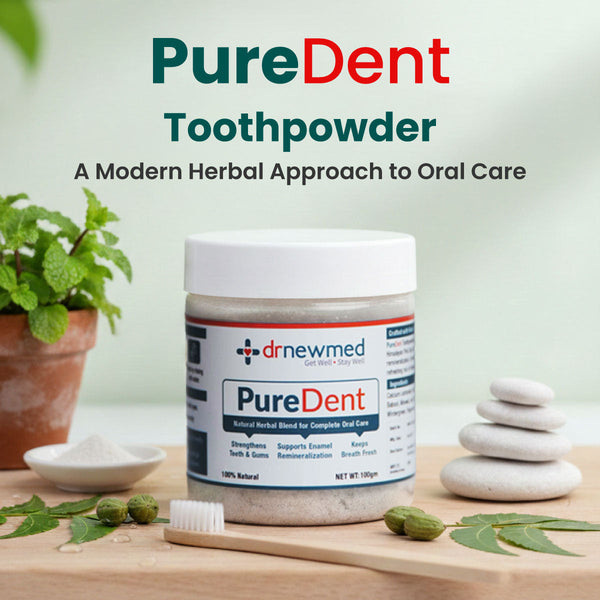
After tongue scraping, brush with an herbal tooth powder containing Neem, Cloves, and Triphala. These herbs are specifically active in the morning context: Neem's antibacterial properties clear the overnight bacterial colonisation of the teeth and gums; Clove stimulates the salivary glands (saliva is your mouth's primary defence against cavities); and Triphala begins its gentle detoxifying work on the digestive mucosa it contacts during brushing.
Unlike fluoride toothpaste, herbal tooth powder does not require you to avoid eating for 30 minutes after use. You can proceed immediately to the next step.
Step 3 — Warm Water with Optional Lemon (3 minutes)
Drink one full glass (250–300ml) of warm — not hot — water. You can add the juice of half a lemon if you enjoy the taste, though this is optional.
The mechanism here is straightforward: overnight, your digestive system has been at rest and your colon has been in its final processing phase. Warm water stimulates the gastrocolic reflex — a neural response that triggers peristalsis in the colon, initiating the morning's bowel movement. This is precisely why so many people find they need the bathroom within 20–30 minutes of drinking warm water in the morning. This regularity is not trivial. Consistent, complete morning elimination is one of the strongest markers of digestive health in both Ayurvedic and modern gastroenterological assessment.
If you take a herbal supplement such as WeighLess Capsules, this is the right time — 30 minutes before breakfast with your warm water. The herbs are absorbed most efficiently in this fasted, morning state when digestive enzyme activity is ramping up.
Step 4 — Oil Pulling (10 minutes)
Take one tablespoon of cold-pressed sesame oil (traditional) or coconut oil (more palatable for most modern palates) and swish it gently around your mouth for 10 minutes. The motion should be gentle — not vigorous gargling. After 10 minutes, spit the oil into a bin (not the sink — it will solidify and block drains), then rinse your mouth with warm water.
Oil pulling looks strange to modern eyes. The evidence for it, however, is surprisingly solid. A 2016 randomised controlled trial published in the Journal of Traditional and Complementary Medicine found oil pulling with sesame oil significantly reduced Streptococcus mutans counts, plaque scores, and gingivitis markers compared to control. A 2011 study in the Journal of the Indian Society of Pedodontics found coconut oil pulling as effective as chlorhexidine mouthwash for reducing plaque-induced gingivitis.
The proposed mechanism is simple: the oil picks up and traps bacteria, debris, and cellular waste, which are then expelled when you spit. Ten minutes gives the oil enough time to work through the entire oral cavity. The traditional instruction to do this on an empty stomach appears to matter — the bacterial load is highest before eating, maximising what the oil can pick up.
An important note: oil pulling is an adjunct to brushing, not a replacement for it. Do it before or after brushing — the sequence matters less than the consistency.
Step 5 — 5 Minutes of Stillness (5 minutes)
Sit quietly for five minutes. This can be formal meditation, simple breath awareness, prayer, or just sitting without a device. The specific form matters less than the absence of stimulation.
This step is the most commonly skipped and the most important for hormonal health. As noted earlier, cortisol is elevated in the first 30–45 minutes after waking. Quiet, non-stimulating activity allows the cortisol awakening response to complete its natural arc and begin declining before you enter the demands of your day. People who practise morning stillness consistently show measurably lower all-day cortisol levels — and lower cortisol means less abdominal fat deposition, better immune function, and improved insulin sensitivity.
You do not need to achieve a clear mind. You do not need to meditate successfully. Just sit, breathe, and let your nervous system finish waking up at its own pace.
Why This Sequence in This Order?
The sequence is not arbitrary. Tongue scraping before drinking water prevents reabsorption of overnight toxins. Brushing after scraping (not before) means you are cleaning teeth that have already had bacterial coating loosened. Warm water after brushing hydrates and triggers the gastrocolic reflex without any toothpaste residue interference. Oil pulling on an empty stomach maximises bacterial pickup. Stillness last preserves cortisol's natural morning function before gently helping it resolve.
Ayurveda arrived at this sequence empirically over thousands of years. It is gratifying — and not entirely surprising — that the mechanisms modern science has discovered validate the order.
What to Expect
In the first week, you will likely notice fresher breath and more consistent morning elimination. By week two to three, most people report steadier energy through the morning without needing stimulants. By week four to six, digestive regularity is typically well-established and many people notice reduced bloating and improved skin clarity — both downstream effects of better toxin elimination.
The gradual weight changes — which many people report over 60–90 days of consistent practice — come primarily from lower cortisol, improved digestion, and the reduction in Ama that Ayurveda predicts. These are not dramatic before-and-after changes. They are the quiet, lasting improvements that come from working with your body's systems rather than overriding them.
The One Thing Most People Skip — And Shouldn't
If you take nothing else from this article: drink warm water immediately after waking, before your phone, before coffee, before anything else. This single habit, practised consistently, has a measurable positive effect on digestive health, morning cortisol, hydration status, and bowel regularity. It costs nothing, takes three minutes, and is the foundation on which everything else in the morning routine rests.
Start there. Add tongue scraping when that becomes automatic. Add herbal brushing when tongue scraping is a habit. Build slowly. Dinacharya is not a 20-minute achievement — it is a lifelong practice, adopted one step at a time.
Note: If you have thyroid conditions, are on blood thinners, or have other medical considerations, discuss these practices with your doctor before beginning — particularly oil pulling, which may have minor interactions with certain dental restorations.