Is Your Toothpaste Quietly Harming You? The Case for Herbal Dental Care
You brush your teeth every day — probably twice. It is one of the most consistent habits in your life. But when was the last time you actually read what is in your toothpaste? The answer, for most people, is never. And for good reason: the ingredient lists are dense, technical, and largely designed not to be read.
As someone who has studied pharmaceutical formulation and oral health for over a decade, I want to walk you through what modern commercial toothpaste actually contains, what the research says about these ingredients, and why a growing number of dentists and health-conscious Indians are returning to herbal alternatives.
The Three Ingredients Worth Knowing About
Commercial toothpastes typically contain dozens of ingredients. Most are benign. But three deserve your attention.
Sodium Lauryl Sulphate (SLS)
SLS is the foaming agent that makes toothpaste lather. It has nothing to do with cleaning ability — foam is purely a psychological signal that something is happening. What SLS actually does is strip the protective mucin layer inside your mouth.
This mucin layer is your first line of oral defence. It protects the soft tissue of your mouth and helps maintain a healthy oral microbiome. Multiple clinical studies have linked SLS to increased frequency of canker sores (aphthous ulcers). A 1996 study in the Journal of Clinical Periodontology found participants using SLS-free toothpaste had 70% fewer canker sore outbreaks. If you are prone to mouth ulcers, SLS is likely a significant contributor.
Triclosan
Triclosan is an antibacterial agent added to some toothpastes to fight gum disease. The problem: it does not distinguish between harmful and beneficial bacteria. The oral microbiome — the community of bacteria living in your mouth — is surprisingly complex and mostly beneficial. Triclosan disrupts this balance indiscriminately.
More concerning, triclosan has been detected in human blood, urine, and breast milk in studies from multiple countries, suggesting significant systemic absorption through mucous membranes. The US FDA banned triclosan from hand soaps in 2016 citing safety concerns, yet it remains in some oral care products.
Artificial Sweeteners
Most toothpastes contain saccharin or sorbitol to improve taste. While these are generally considered safe in small quantities, emerging research on gut microbiome disruption from artificial sweeteners is raising questions about daily oral exposure — particularly for children, who are more likely to swallow toothpaste.
The Fluoride Question
Fluoride is where dental opinion is most divided, and where I want to be balanced and honest.
The evidence that fluoride prevents cavities in populations with high sugar consumption is well-established and genuine. For children growing up on modern diets heavy in processed sugars, fluoride genuinely reduces decay rates. This is not in dispute.
However, the picture is more nuanced. Dental fluorosis — caused by excess fluoride during tooth development — affects 41% of American adolescents according to the CDC, suggesting exposure has exceeded optimal levels in many populations. Systemic fluoride (swallowed rather than topically applied) has been studied for effects on thyroid function, with some research suggesting interference at high doses.
For adults eating a relatively low-sugar diet who do not swallow their toothpaste, the case for fluoride is weaker than commonly presented. For children, or adults with high cavity risk, it remains a reasonable choice. The point is not that fluoride is poison — it is that the choice deserves more thought than the marketing suggests.
What Ayurveda Has Used for Thousands of Years
Before commercial toothpaste existed — which was only invented in the 1870s — oral health across cultures was maintained through very different means. In India, the traditional approach centred on four things: Neem twigs (the original toothbrush), herbal tooth powders, oil pulling, and tongue scraping. Archaeological evidence suggests these practices produced remarkably good oral health outcomes in pre-industrial populations.
The specific herbs used were not chosen arbitrarily. They were selected over centuries of empirical observation for their effects on breath, gum health, tooth strength, and bacterial control. Modern research has now characterised the mechanisms behind many of these effects.
The Science Behind Herbal Oral Care
Neem (Azadirachta Indica) contains over 130 bioactive compounds. The most relevant for oral health are nimbin, nimbinin, and nimbidol — all of which exhibit potent antibacterial activity against the specific strains responsible for plaque, cavities, and gum disease. A 2004 study in the Journal of Indian Society of Periodontology found Neem extract as effective as chlorhexidine (the gold-standard pharmaceutical antiseptic mouthwash) for reducing gingival bacteria — without chlorhexidine's side effects of tooth staining and taste disruption.
Cloves (Syzygium aromaticum) contain eugenol, a compound so effective for tooth and gum pain that it forms the basis of numerous dental anaesthetics used in clinical practice. Eugenol also has potent antibacterial properties against Streptococcus mutans — the primary bacterium responsible for dental cavities.
Triphala — the three-fruit Ayurvedic formula — has been studied specifically for oral health applications. Research published in the Journal of Indian Society of Pedodontics found Triphala mouthwash significantly reduced Streptococcus mutans and Lactobacillus bacteria counts, and improved plaque and gingival indices comparable to chlorhexidine.
Activated Charcoal works through adsorption — physically binding surface stains and toxins to its porous structure and removing them when rinsed. Unlike abrasive whitening agents that scratch enamel, activated charcoal lifts stains without mechanical damage when used in appropriately fine particle sizes.
Miswak (Salvadora persica) — the plant that the traditional Islamic tooth stick (miswak) comes from — contains natural fluoride, silica, alkaloids, and antibacterial compounds. A systematic review of 38 studies in the Journal of Dentistry found regular miswak use as effective as toothbrushing for plaque and gingival health.
Why Tooth Powder Rather Than Toothpaste?
Toothpaste is fundamentally a mid-20th century marketing invention. The paste format requires humectants, preservatives, binders, and stabilisers to maintain its texture on a shelf for two years. Many of these additives do nothing for oral health — they exist only to maintain the paste consistency.
Tooth powder is the natural format for oral care. It requires none of these additives, delivers active herbal ingredients in higher concentrations, and has been shown in multiple studies to be at least as effective as toothpaste — and more effective for plaque removal in several head-to-head comparisons.
A 2018 study in the International Journal of Dental Hygiene found herbal tooth powder users showed significantly better plaque index scores than conventional toothpaste users after 12 weeks of use.
Making the Switch
Transitioning from toothpaste to herbal tooth powder takes about a week for the mouth to adjust. The absence of foam can feel strange initially — your brain has been conditioned to associate foam with cleanliness. Within a week, most users report their mouth feels genuinely cleaner, their breath is fresher, and their teeth feel smoother throughout the day.
The technique is straightforward: dampen your toothbrush, dip it lightly into the powder, brush gently for two minutes using circular motions, and rinse thoroughly. No special equipment needed.
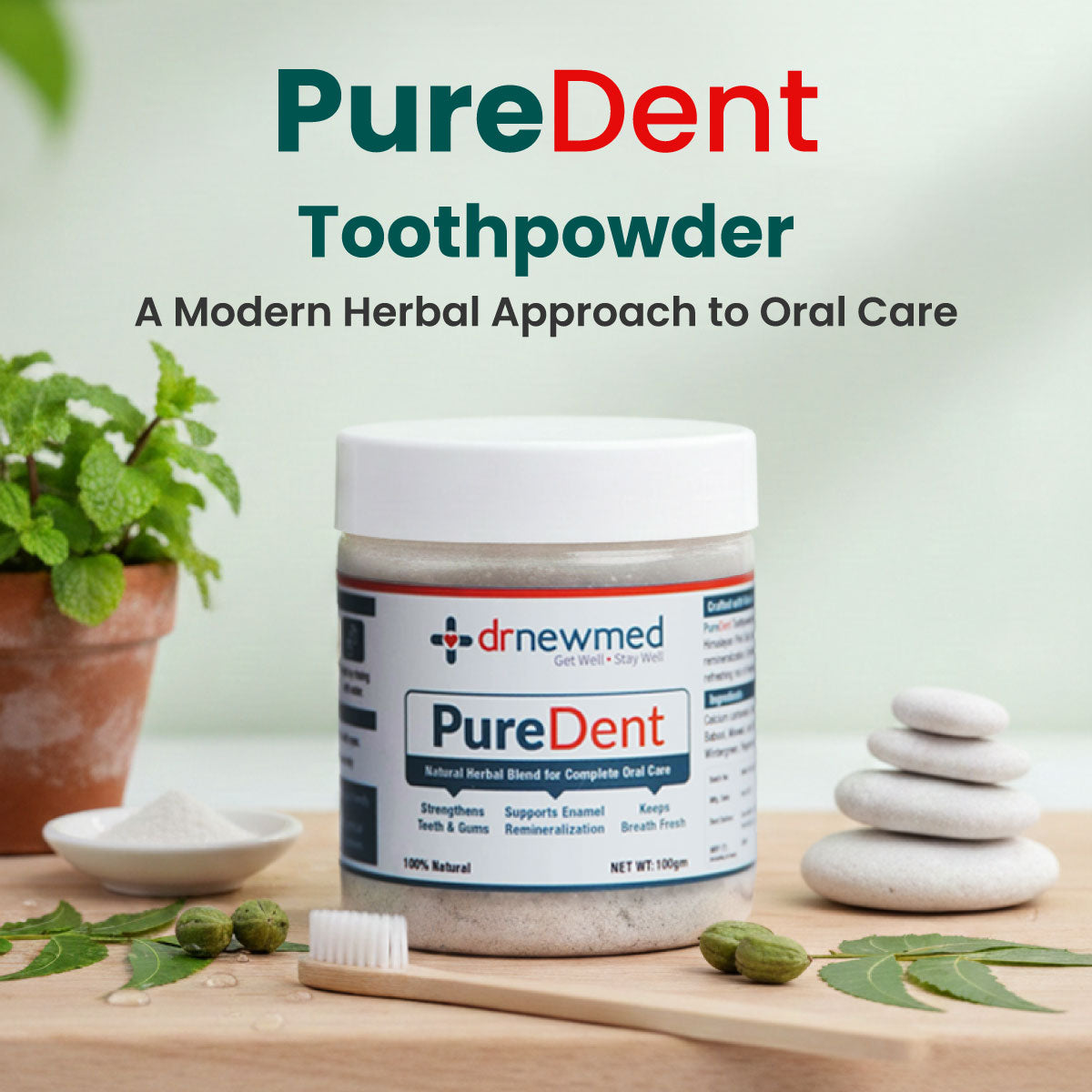
Our PureDent Herbal Tooth Powder combines Neem, Cloves, Triphala, Activated Charcoal, Miswak, Peppermint Oil, and Sea Salt — each included for a specific, evidence-based oral health benefit. It contains no SLS, no artificial sweeteners, no synthetic preservatives, and no fluoride — just seven herbs working together the way oral care has worked for millennia.
A Final Note on Expectations
Herbal oral care does not produce overnight transformations. Gum health improves gradually over weeks. Whitening from activated charcoal is progressive rather than instant. But the changes — once established — tend to be lasting, because you are working with your mouth's natural systems rather than suppressing them.
Most of our PureDent users report noticeably fresher breath within the first week, reduced gum bleeding by week two to three, and visible whitening by week four to six. These are gentle, real, and sustainable improvements.
Note: This article presents general information for educational purposes. If you have specific dental concerns, active gum disease, or dental restorations, consult your dentist before changing your oral care routine.